What Makes a School Project Good Evidence of Skill?
A project becomes useful evidence when students make visible decisions, work under constraints, revise after feedback and can explain what they contributed.
Research note: time-sensitive claims and source links were reviewed on . Primary sources are listed at the end of the article where available.
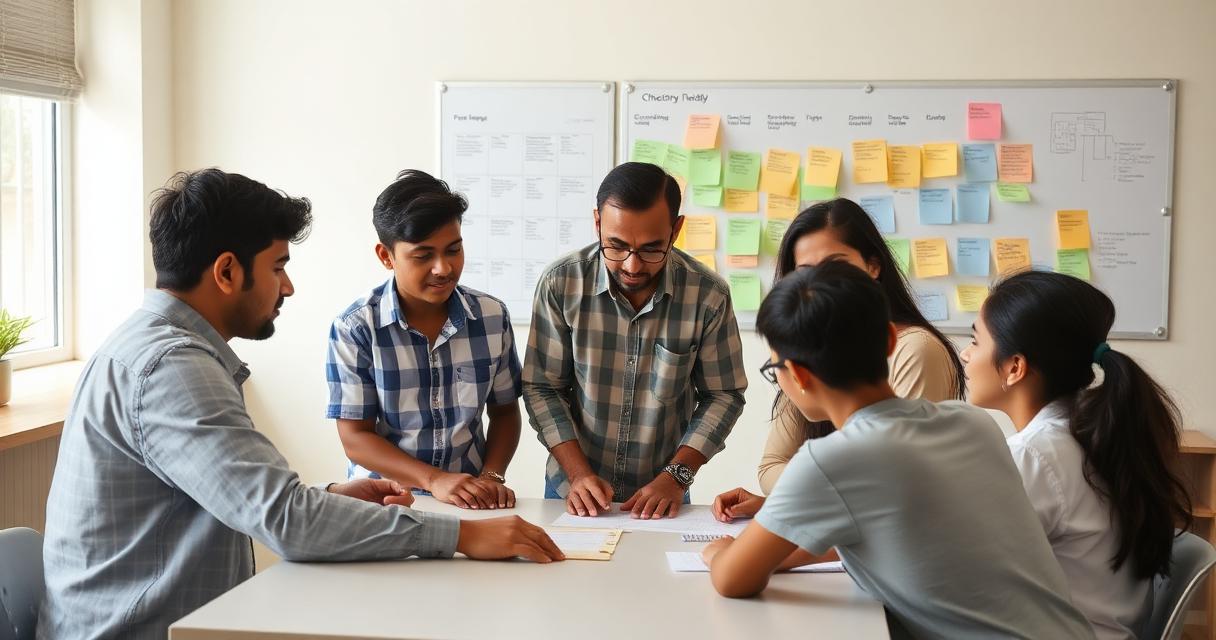
Project-based learning is easy to praise and surprisingly easy to fake. A student can submit a polished deck assembled by one teammate, copied from the internet or heavily generated with AI. The final artefact alone may tell a school very little.
CBSE's holistic assessment direction includes project- and inquiry-based learning because different competencies require different kinds of evidence. That makes project design important: the task should create situations where judgment, collaboration, communication and iteration can actually be observed.
Five features of a project that generates useful evidence
- A problem with more than one possible answer.
- Constraints: time, materials, audience, data or stakeholder needs.
- Visible student decisions rather than step-by-step teacher instructions.
- A feedback-and-revision cycle.
- A final explanation in which students defend the choices they made.
Capture the process, not only the showcase
Ask students to keep a lightweight decision log: what changed, why it changed and which evidence influenced the change. For group projects, require each learner to state their contribution. These small records make the project much more useful for assessment and portfolio reflection.
A real audience improves the task
A project designed for a real user — another class, a local organisation, parents, a school club or a community need — tends to generate better constraints than a fictional worksheet. Students have to care whether another person understands or can use the result.
"The project is the stage. The evidence is what the student decided, built, revised and can explain."
Avoid the 'parent-built project' problem
The more polished a school showcase becomes, the easier it is for adult help to become invisible. Schools can reduce this by collecting process evidence during class: sketches, decisions, short check-ins, prototypes and individual reflections. The question is not whether a parent ever helped; it is whether the school can still see what the student understood and contributed.
AI creates the same challenge at greater speed. A student can now produce code, writing and visuals that exceed their independent skill. Rather than banning every tool, require students to disclose meaningful assistance and defend the final work. Process evidence becomes an assessment safeguard.
A useful project review has three voices
- Student: what I tried, changed and learned.
- Peer or teammate: what I observed this person contribute.
- Teacher/mentor: what the evidence demonstrates against the rubric.
These perspectives do not need to become a complex 360-degree score. Even short notes can reduce the gap between a beautiful final product and the learning that actually happened.
The project brief is part of the assessment design
If every step is prescribed, students have little room to demonstrate judgment. If the brief is completely open, they may spend most of the time deciding what the assignment even means. Good briefs define the problem, constraints and expected evidence while leaving meaningful choices to the learner.
Schools can review briefs the same way they review rubrics: ask which skills the task gives students a genuine opportunity to demonstrate. If 'creativity' is in the rubric but the output is predetermined, the assessment is asking for evidence the task cannot produce.
Sources and further reading
Want to test this in your school?
OnliGrow is being built to turn these ideas into a structured school program. A useful pilot starts with your context, not a standard promise.
Discuss a pilot